

Our Research
What role do organisms play in the structure and functioning of ecosystems? Understanding species interactions and their consequences for community structure and ecosystem function is foundational to ecology and predicting the ecological effects of global change. The Tumolo Lab is focused on examining the linkages between species and ecosystem functions and how global change effects these linkages.
Research Themes
Global change in freshwater
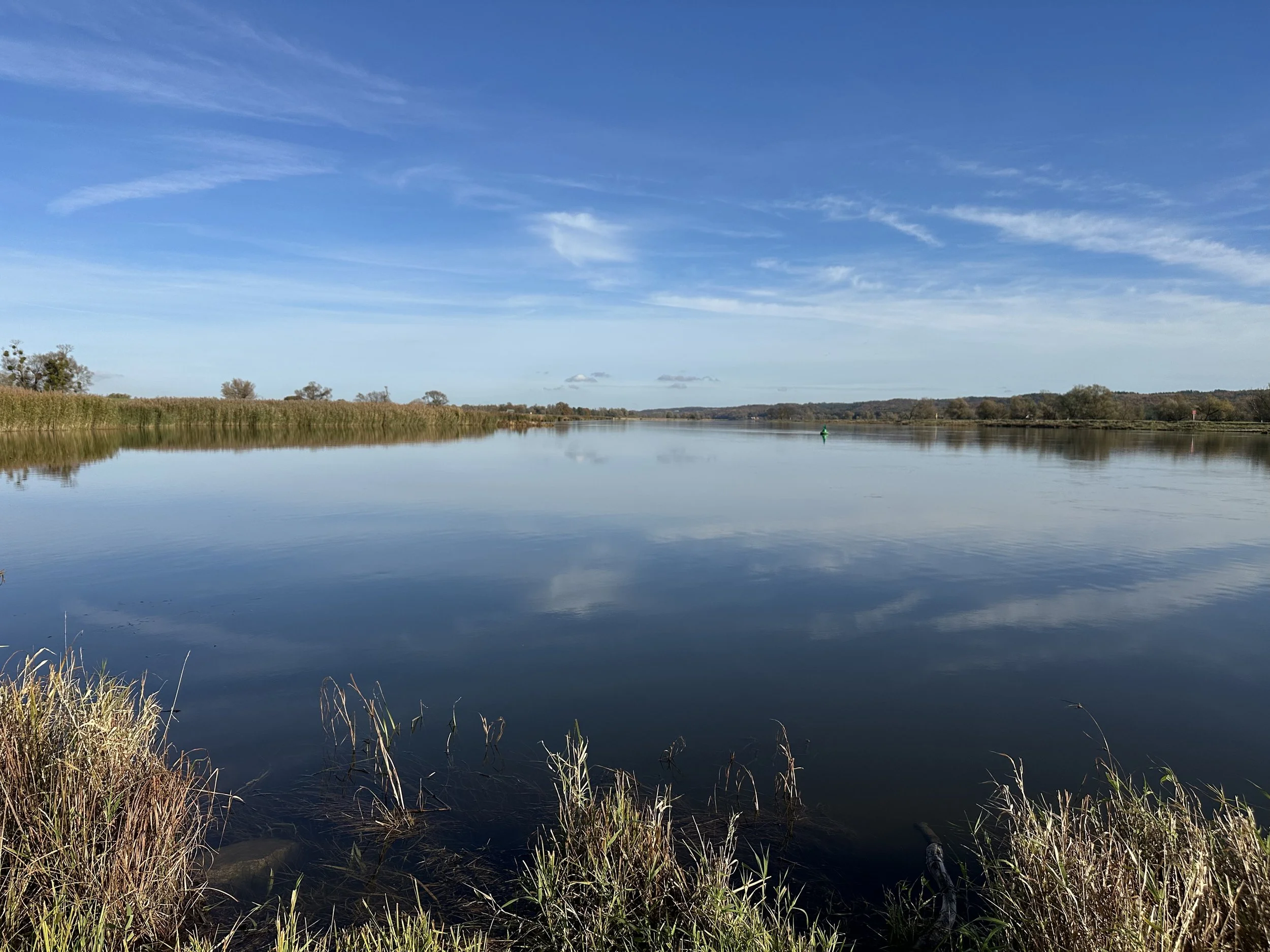
The Oder River, dividing Germany and Poland seen from the German side. Photo Credit: Paula Torre Zaffaroni
Freshwater ecosystems are changing rapidly in response to multiple intensifying anthropogenic pressures. We conduct collaborative work to examine how climate warming, altered hydrologic regimes, and biogeochemical cycles affect freshwater biodiversity and ecosystem functioning at a variety of scales. Our projects in this area use a diversity of approaches from long-term hydroclimatic and ecological datasets, museum-based natural history collections, and field experiments, to examine anthropogenic impacts on freshwater community structure and function.
Community shifts in response to climate change: In this project we combine long-term hydroclimatic and ecological datasets, museum-based natural history collections, and field experiments, to examine how invertebrate communities have changed in response to climate warming. MS student Claire Ebner, and undergraduates Kara Bowles and Daniel Cipriano are all working on this project.
Environmental disaster on the Oder River: Ben continues to collaborate with Leibniz Institute of Freshwater Ecology and Inland Fisheries, Berlin (IGB) as they examine the responses of and recovery of the Oder River to multiple human-mediated stressors.
Scaling-up biotic interactions and freshwater community dynamics
Our work in this area employs macro-scale analysis to understand how species interactions manifest to affect community composition and ecosystem functions at large spatial scales, including those relevant to policy makers and emerging challenges in conservation and management.
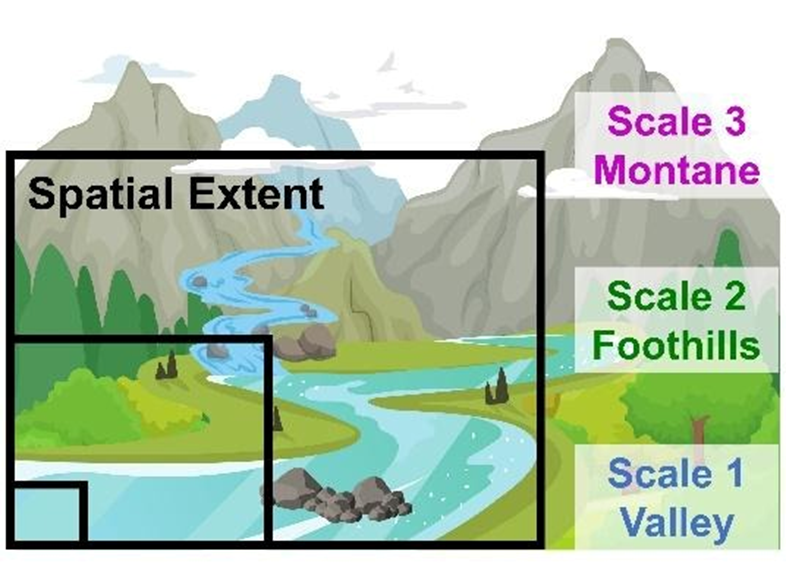
Positive interactions: Using large-scale open access data sources, such as NEON, meta-analysis, cross-jurisdictional experiments our work aims to better understand how spatial scale interacts with biotic interaction strength in freshwater communities.
Ecological Stoichiometry: We combine first-principal frameworks such as ecological stoichiometry and open access ecological monitoring to quantify and scale-up ecological thresholds spatially, temporally, and across levels of biological organization with attention to patterns of freshwater biodiversity.
Insect ecosystem engineers
How do organisms govern community and ecosystem processes by modifying their physical environments?
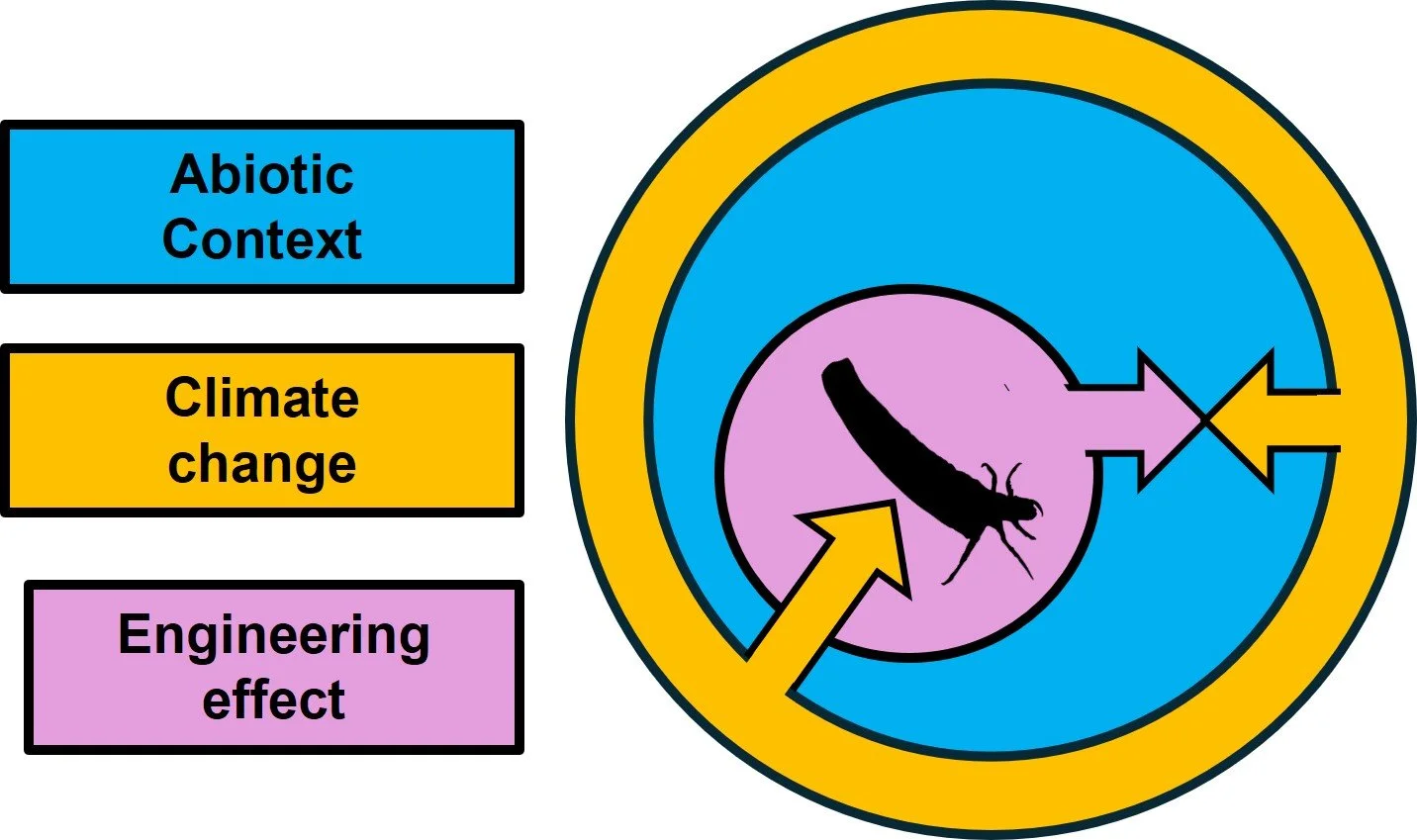
Ecological consequences of organism engineering: My lab uses aquatic insect larvae to study how organism-mediated changes to sediment stability, erosion, and near-bed hydraulics feedback to community composition and ecosystem processes in rivers.
Engineers in a changing world: Work in my lab is exploring how anthropogenic-driven disturbances such as climate warming intersect with and contextualize the roles of ecosystem engineering on community and ecosystem processes. We are interested in understanding if and how engineering activities confer community and ecosystem resilience under global change scenarios. This initiative will also measure how global stressors alter engineering capacity and therefore the impacts of engineers on community and ecosystem processes into the future. Untangling how global change alters the capacity for organisms to affect physical environments may provide deeper understanding into the roles that animals will play in a changing planet.